
The norias of Hama
نواعير حماةWooden waterwheels up to twenty metres across, lifting Orontes water into aqueducts.
Conserved and turning. One wheel was deliberately burned in 2014; others suffered from lack of maintenance.
Demo site — Arsu Tours is not a real company. Nothing here can be booked. What this is
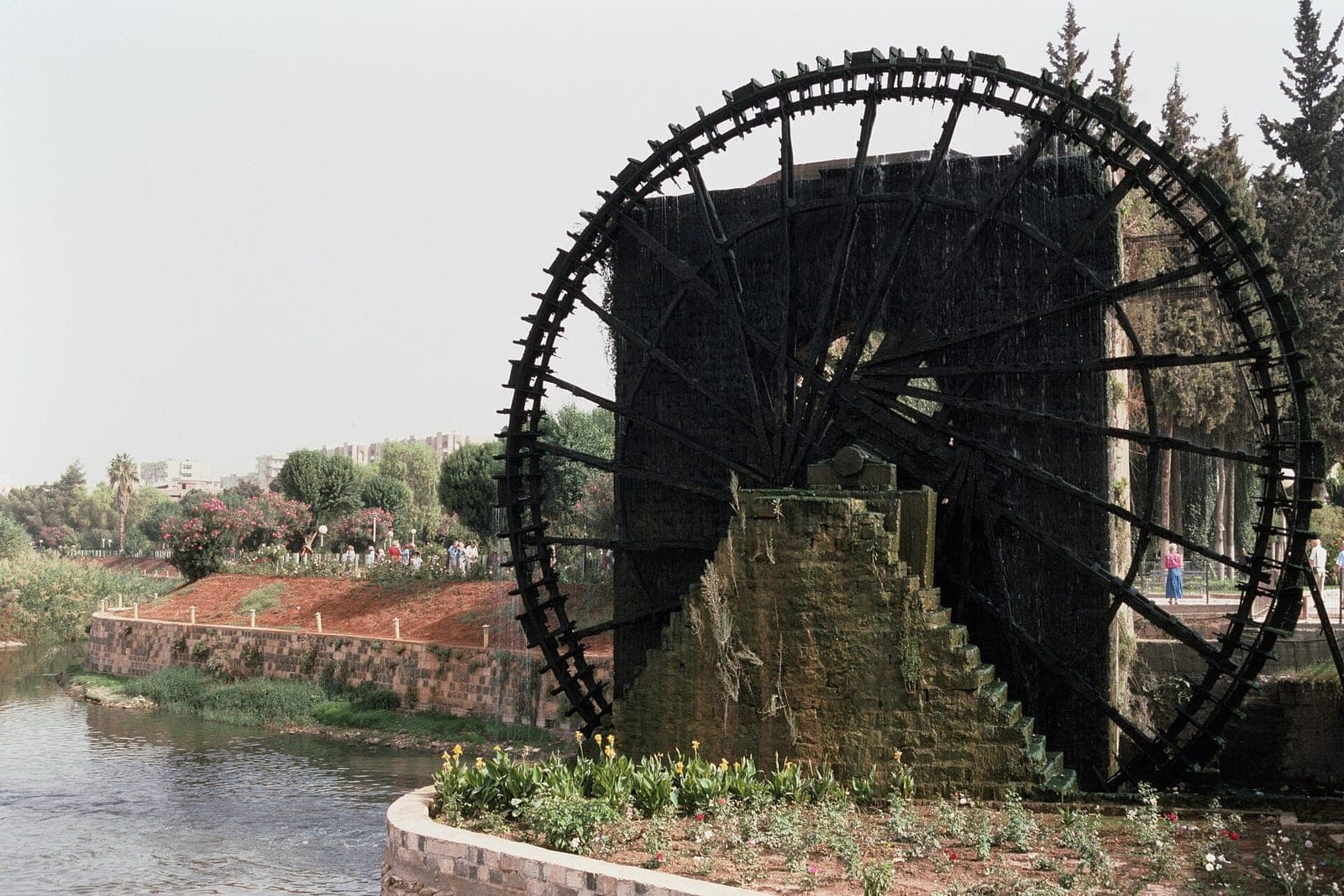
A noria — a large wooden waterwheel — standing on the Orontes at Hama. Photo by Frank Kidner via Wikimedia Commons · CC BY-SA 4.0
The norias — enormous wooden waterwheels on the Orontes — still turn, and the riverside gardens below them are where Hama goes in the evening. Apamea is an hour northwest.
The norias are the reason to stop. They are conserved and several still turn; one wheel was deliberately burned in 2014 and others were left unmaintained during the war. The coffeehouses at their base are built so you hear the groan of the wheel over the conversation.
Two different periods of damage meet in this city and should not be run together. Al-Nuri Mosque and the Azm Palace were both damaged by shelling in 1982 and restored over the decades that followed. Apamea’s damage is separate and post-2011.
Apamea is a Seleucid foundation with a colonnaded main street running close to two kilometres through open country. The colonnade and theatre stand. The site was also looted extensively after 2011, documented from satellite imagery — the quiet there is not picturesque, it is what was left behind.
Condition notes are given for each site, including where something was destroyed or is closed. They are the point of this page.
Wooden waterwheels up to twenty metres across, lifting Orontes water into aqueducts.
Conserved and turning. One wheel was deliberately burned in 2014; others suffered from lack of maintenance.
Close to two kilometres of colonnaded street on a ridge above the Ghab plain, some columns spiral-fluted.
Colonnade and theatre standing. The site suffered extensive, satellite-documented looting after 2011.
The Hama residence of the same governing family whose Damascus palace is the better known of the two.
Damaged in the 1982 bombardment, restored after 2005.
A Nizari Ismaili stronghold west of Hama, in the mountains between the valley and the coast.
Under restoration since 2000 with Aga Khan Trust for Culture support.
Damage from 1982 and damage from the post-2011 war are distinct events with distinct causes, and are kept separate here.
Hama sits on the main Damascus–Aleppo highway. Apamea is 45 minutes to an hour northwest; Masyaf about 45 minutes west.
Riverside qahwas built at the foot of the wheels, where the noria’s groan is simply part of the evening.